
A common misconception in DeFi is that a transaction is safe if the wallet displays the correct token, contract, and network. That assumption fails because the most important question is not what a transaction appears to contain, but what the receiving contract will actually do when it executes. A signature can authorize a token transfer, change an allowance, trigger a swap with severe slippage, or interact with a malicious contract that presents a harmless-looking request.
Transaction simulation addresses this gap by estimating the result of a proposed transaction before it is broadcast. It is not a crystal ball, and it does not replace careful judgment. But for users moving between Ethereum, layer-2 networks, and other EVM-compatible chains, simulation can turn an opaque signing prompt into a more interpretable risk decision. The important shift is conceptual: a wallet should help users inspect the consequences of signing, not merely confirm that they are signing.
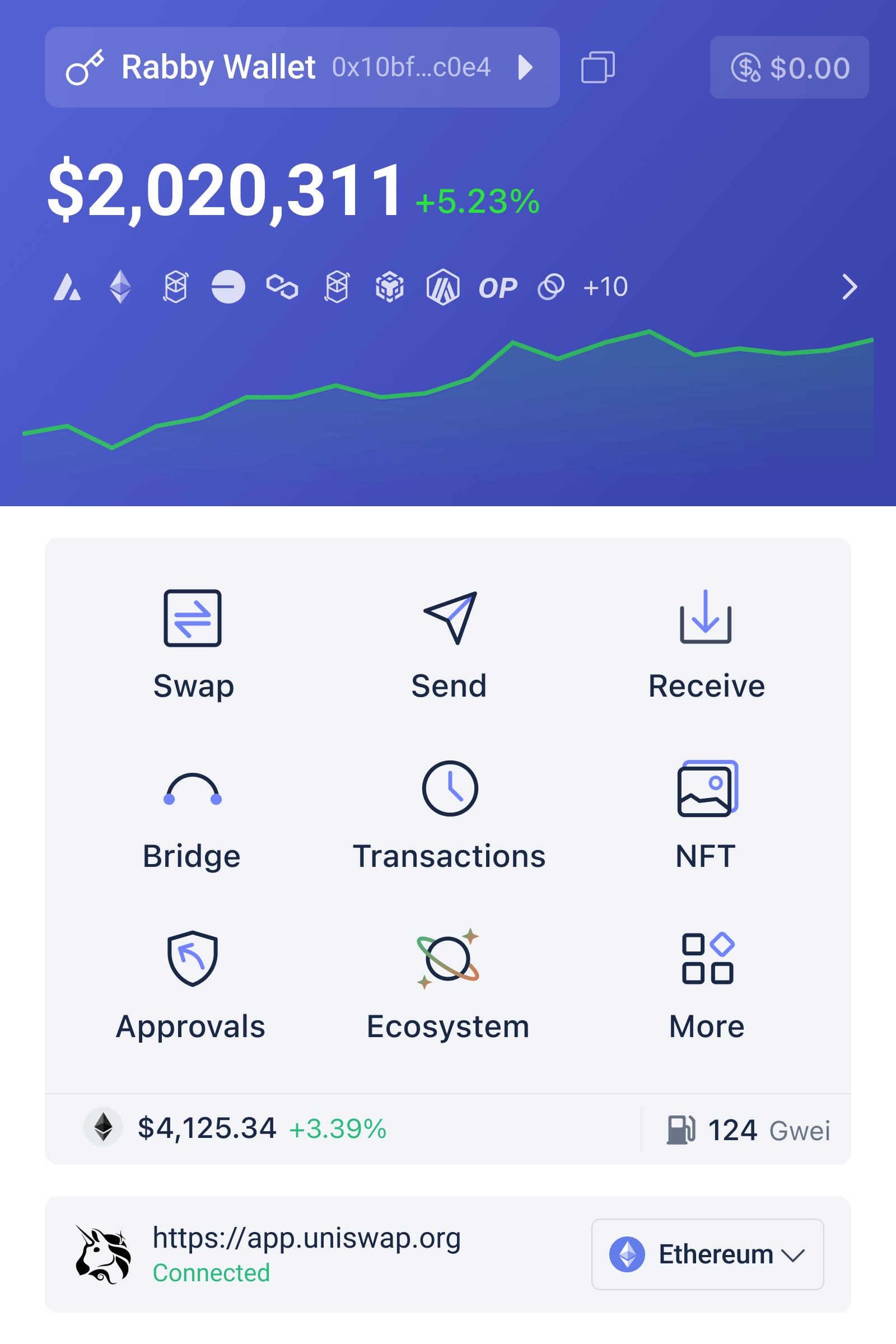
The security problem is execution, not appearance
Most DeFi applications do not ask a user to manually construct low-level blockchain instructions. Instead, a website prepares a transaction and sends it to a wallet for approval. The wallet may show a contract address, network, gas estimate, and function name. Those details are useful, but they are only partial evidence. The contract address may be unfamiliar, the function may be difficult to interpret, and a seemingly routine approval may give a spender broad authority over a token balance.
This is especially significant with token allowances. An allowance is permission for a smart contract or spender to move a specified amount of a token on the user’s behalf. Approving a precise amount can limit exposure, while approving an effectively unlimited amount can create a continuing liability if the contract is compromised, upgraded, or later found to be malicious. The transaction may succeed exactly as designed, yet still leave the user exposed to a future drain. A successful transaction is therefore not the same thing as a safe transaction.
Simulation adds another layer by asking an execution environment to model what would happen if the transaction ran under current conditions. Depending on the wallet and its available infrastructure, the preview may show assets leaving the wallet, assets arriving, an allowance changing, a contract call reverting, or a value mismatch between the user’s intent and the likely result. This is a more useful security question than “Does the transaction look familiar?” because it focuses attention on state changes.
For a DeFi user in the United States, the practical value is straightforward. A wallet may be used across a browser, hardware device, centralized exchange withdrawal flow, and several blockchain networks in the same week. Network names can look similar, gas tokens differ, and applications may automatically switch chains. Simulation creates a pause before the signature becomes an irreversible on-chain action. That pause is operational security, not friction for its own sake.
Why multi-chain activity raises the stakes
A multi-chain wallet is not simply one account copied across several networks. It is an interface to different ledgers, contracts, bridges, liquidity pools, fee systems, and application environments. The same address may exist on several EVM-compatible chains, but its balances and transaction history are chain-specific. A user can have the right address and still be on the wrong network.
This creates a subtle failure mode: address familiarity can produce false confidence. A user may recognize the first and last characters of a contract address and assume the destination is legitimate, even though the address belongs to a different deployment or network. Similarly, a token symbol can be duplicated by unrelated assets. “USDC,” for example, is a label used in different contexts and does not by itself prove that the token is the expected asset on the selected chain.
Bridges and cross-chain applications add further complexity. A bridge transaction may lock or burn an asset on one chain and rely on a separate system to mint or release a representation elsewhere. Simulation of the initial transaction can reveal what leaves the wallet, but it may not fully describe every later step in a cross-chain process. Delays, relayers, message verification, liquidity availability, and destination-chain execution can sit outside the first signature. This is a boundary condition worth remembering: transaction simulation is strongest for the action being modeled, not necessarily for the entire economic workflow.
That limitation does not make simulation unhelpful. It clarifies how to use it. Treat the preview as a transaction-level control, then assess the broader protocol separately. A bridge may produce a clean simulation while still carrying smart-contract, validator, governance, liquidity, or operational risks. The more complex the application path, the less reasonable it is to compress the entire decision into one green status indicator.
What a useful simulation should help you notice
The best mental model is to compare three things: the user’s intention, the requested permissions, and the simulated state change. If those three do not align, stop. For a token swap, the intended outcome might be that one asset decreases and another increases. If the preview instead shows only an outgoing transfer, an unexpected approval, or a different recipient, the transaction deserves investigation before signing.
Simulation is also useful for identifying reverts. A transaction that would fail may still consume network fees, and repeated failed attempts can become expensive during periods of congestion. More importantly, a revert can indicate a stale quote, insufficient liquidity, unsupported token, incorrect chain, or application malfunction. The preview does not always explain the cause perfectly, but it can prevent a user from treating a failed or contradictory action as routine.
Users should pay particular attention to approvals, permit signatures, and transactions involving unfamiliar contracts. A permit is an off-chain signature that can authorize token spending without immediately sending a conventional approval transaction. Because it may look different from a standard on-chain transfer, users can underestimate its significance. The security principle remains the same: understand who receives authority, for which asset, in what amount, and under what conditions.
There is a practical reason to install a wallet extension with strong transaction-review capabilities rather than relying only on a website’s interface. The website has an incentive to make its flow feel simple; the wallet is the last independent checkpoint before signing. Users evaluating the rabby extension download should obtain the extension from a source they can verify, check the browser’s publisher information, and avoid installing copies promoted through unsolicited messages or search advertisements. A security feature is valuable only if the software itself is authentic.
Simulation is a control, not a verdict
One of the most important limitations is that simulation depends on information about the current blockchain state and the infrastructure performing the simulation. State can change between the preview and the actual inclusion of a transaction. A pool’s reserves may move, a contract may be updated, a block may alter ordering conditions, or a quote may expire. In fast-moving markets, a favorable preview can become less favorable before execution.
Simulation can also struggle with transactions that depend on external conditions. Oracle prices, block timestamps, gas auctions, private order flow, cross-chain messages, and complex callback logic may not be represented perfectly. Some malicious behavior can be conditional: a contract might behave safely under ordinary inspection but act differently for a particular wallet, block, amount, or sequence of calls. A simulation result should therefore be treated as evidence about a proposed execution, not a guarantee about every future behavior.
There is a second, less obvious limitation: a technically accurate simulation may still be economically incomplete. It can show that a swap will deliver a certain token amount, but not whether the token is liquid, redeemable, correctly issued, or useful outside the application. It may show an NFT arriving in a wallet without establishing whether the collection is authentic. Security has both a technical dimension and an economic one. The transaction can execute exactly as simulated and still be a poor decision.
This is why a mature workflow combines automated review with human checks. Before signing, confirm the selected network, application domain, recipient, asset, amount, approval scope, and expected result. For high-value activity, use a separate browser profile or hardware wallet, test with a small amount, and review existing allowances periodically. These steps do not eliminate risk, but they reduce dependence on any single warning system.
A reusable decision framework for DeFi users
A simple framework is to ask five questions. First, what am I trying to make happen? Second, which contract or account will receive authority or assets? Third, what does the simulation say will leave and enter my wallet? Fourth, what risks remain outside the simulation, such as protocol governance, bridge dependencies, liquidity, or token legitimacy? Fifth, what is the maximum loss I am willing to accept if the assumption is wrong?
The final question matters because risk management is not only about detecting attacks. It is also about limiting exposure when detection fails. Separate wallets for long-term holdings and active DeFi use can reduce the blast radius of a compromised approval or malicious signature. Revoking unused allowances can remove dormant permissions, although users should understand that revocation itself is a transaction with a network fee and should be performed through a trusted interface.
For newcomers, the most useful habit is not memorizing every contract function. It is learning to distrust unexplained state changes. If a simple-looking action produces multiple approvals, an unexpected recipient, or an asset leaving without a corresponding outcome, pause and investigate. For experienced users, the challenge is different: familiarity can become a vulnerability. Speed, routine, and repeated interaction with the same application may encourage signing without reading the final wallet review.
What to watch as wallet security evolves
The likely direction of wallet security is toward richer, more contextual transaction interpretation. Conditional warnings, allowance analysis, address reputation, simulation, and chain-aware interfaces can work together to reduce the gap between smart-contract code and user intent. The strongest systems will not merely label transactions as safe or unsafe; they will explain the specific mismatch or dependency that deserves attention.
That future remains conditional. Better warnings may improve decisions, but attackers can adapt, and users can become desensitized to frequent alerts. More detailed interfaces can also create a new problem if they overwhelm people with technical information. The open design question is how to present uncertainty clearly without turning every transaction into an unreadable audit report. In the near term, users should watch for whether wallet tools explain the reason for a warning, distinguish approvals from transfers, and make network context difficult to miss.
Transaction simulation is therefore best understood as a safety instrument with a defined range. It can make expected state changes visible, expose many obvious mismatches, and create a valuable pause before signing. It cannot certify a protocol, guarantee future execution, or measure every economic and governance risk. The disciplined DeFi user uses it as one part of a layered process: verify the software, confirm the chain, inspect permissions, compare intent with outcome, and size positions so that one mistake is survivable.
Frequently asked questions
Does transaction simulation guarantee that a DeFi transaction is safe?
No. It estimates the result under particular blockchain and infrastructure conditions. It may not capture later cross-chain steps, future contract behavior, liquidity risk, oracle problems, or a token’s legitimacy. A simulation is a useful warning and verification layer, not a guarantee.
Why is simulation especially useful for a multi-chain wallet?
Multi-chain use increases the chance of confusing networks, token representations, contract deployments, and bridge workflows. Simulation helps connect the selected chain and contract call to the expected asset movements, making it easier to identify an action that does not match the user’s intent.
What should I do if the simulated result looks unfamiliar?
Do not sign immediately. Check the application domain, selected network, recipient, token address, approval amount, and expected outcome. If the mismatch cannot be explained through trusted documentation or a known protocol workflow, reject the transaction and investigate using a separate, trusted source.